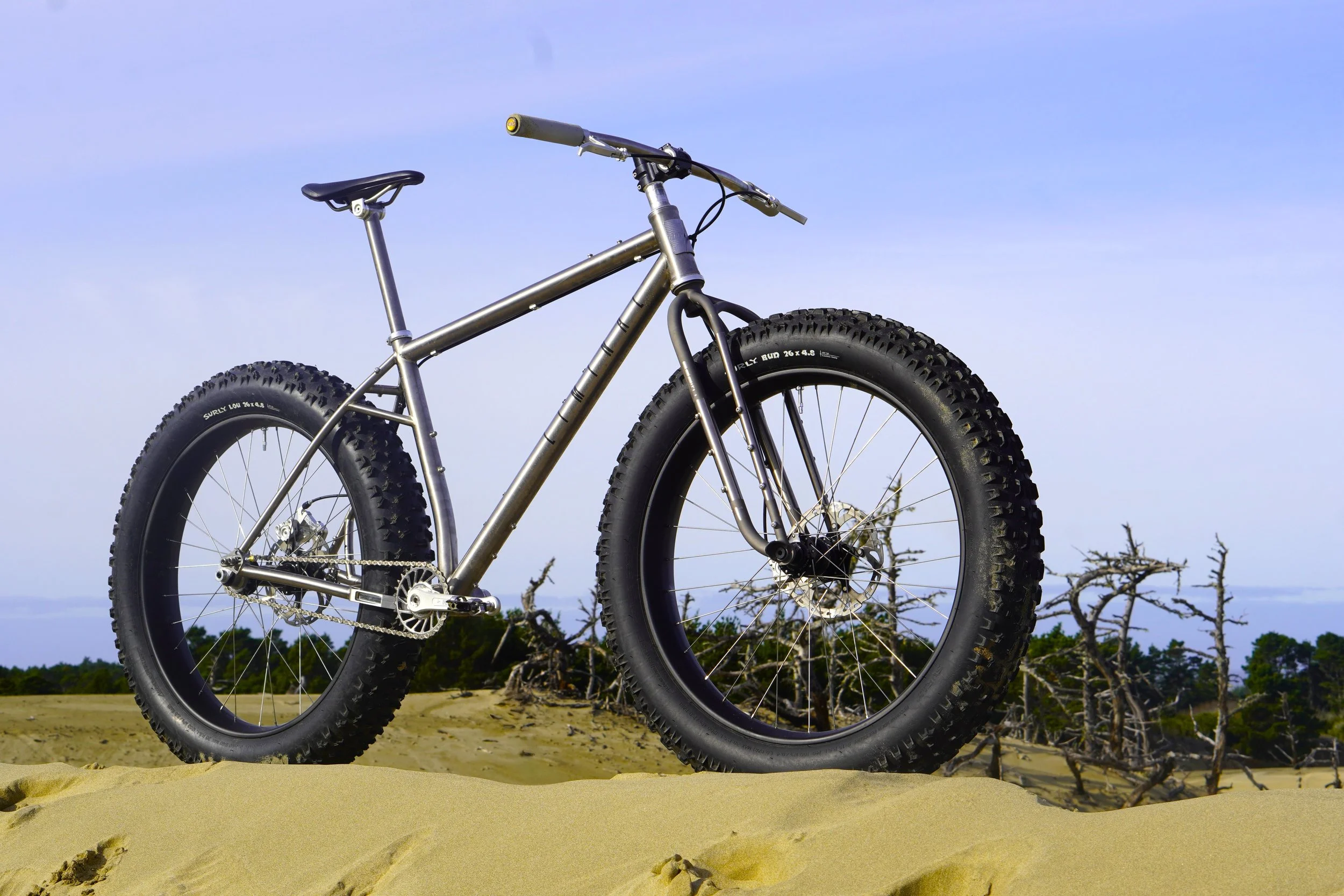
Fat bikes are fun, but pedaling around that much tire with the traditionally wiiide pedal stance (a.k.a. Q-factor) that comes along with most of them can be a real chore. Eric will be pedaling this bike over 4,000 miles and 350,000’ of elevation over the course of the Bikepacking Triple Crown, so he was interested in getting something a bit more efficient.
As fate would have it I’d been sitting on a low Q-factor fat bike design for years, ever since I first swung a leg over a bloated but undeniably fun big-brand fat bike. Q-factors on fat bikes are wide no only to have the crank arms clear the massive tires, but to keep the chain from rubbing on the tire in the lowest gears. Thankfully Eric is also a singlespeed enthusiast, so the latter was less of an issue - though this bike can still run a full 12-speed drivetrain with no tire rub.
Even with a straight chainline you need to get pretty far out (69mm in this case) to keep the chain free of the tire and most of the crud it flings off while riding. I’ve been doing a lot of builds with the Paul Components square taper crank arms and my own T47 square taper bottom bracket, so it was relatively easy to derive a custom spindle length to match the chainline while minimizing Q-factor. All told, the Q-factor is 184mm at its narrowest setting, thanks in part to the adjustable Wolf Tooth pedals. Most fat bikes are well over 200mm and a “normal“ MTB Q-factor is around 174mm - still too wide for my tastes, but that’s another post.
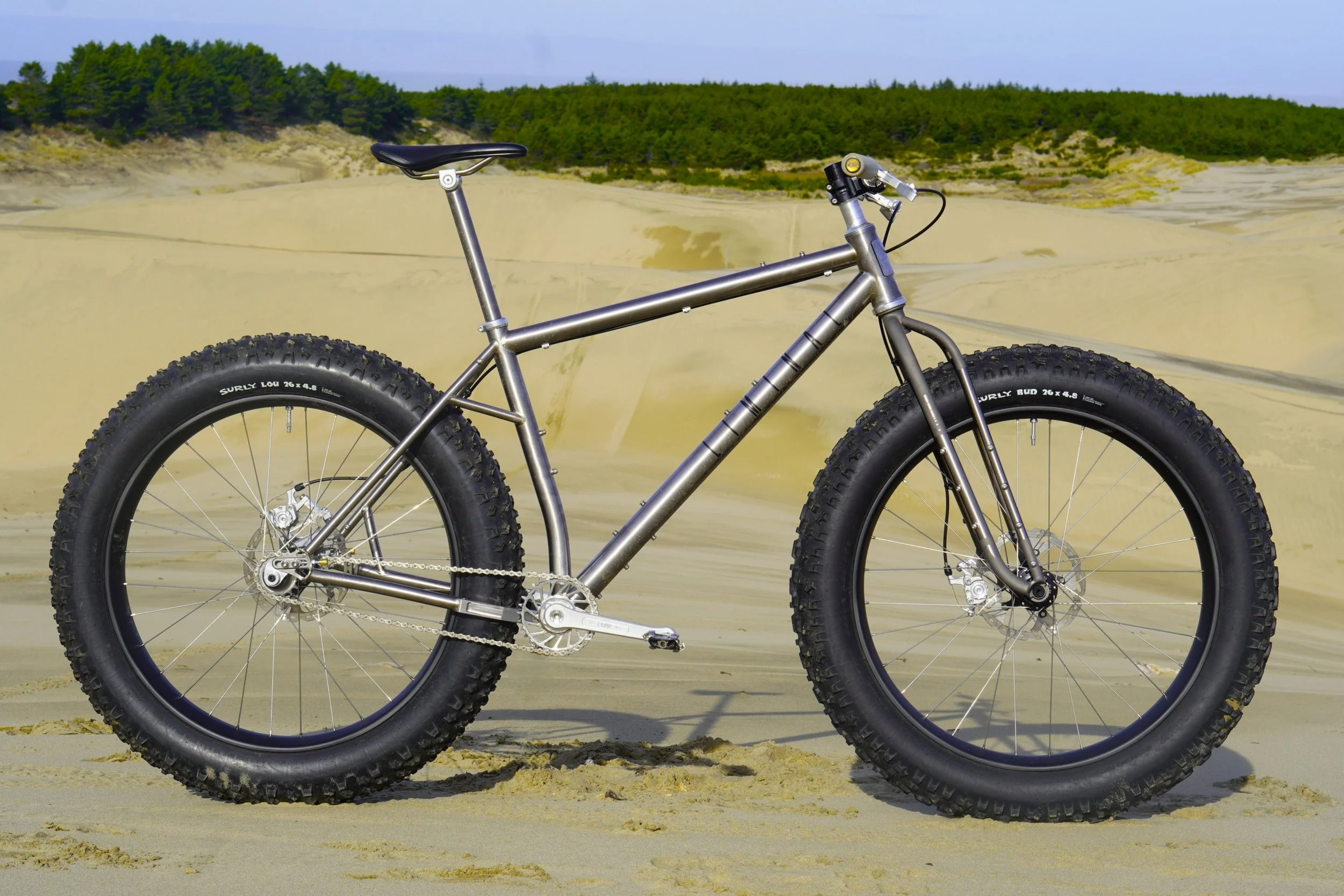
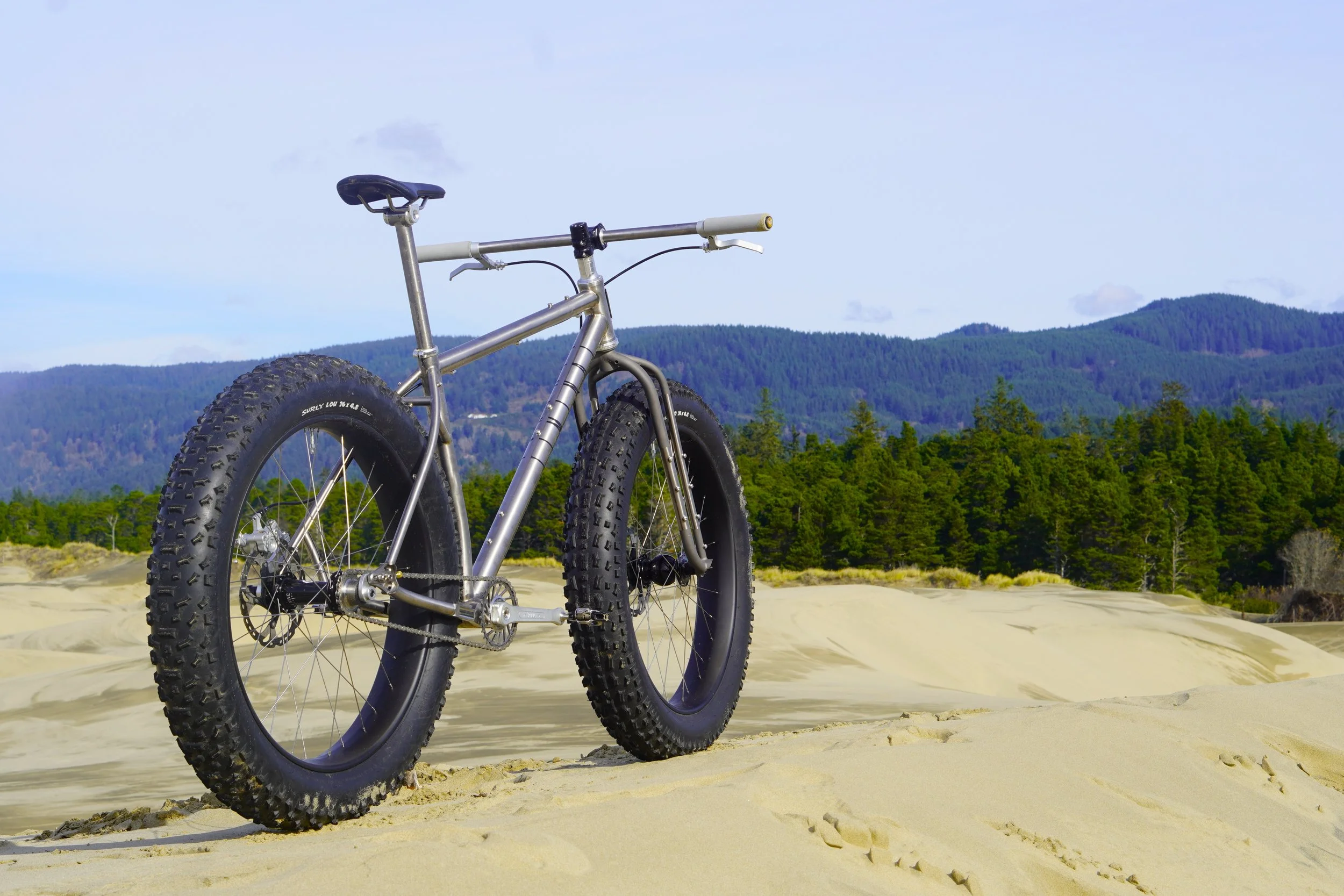
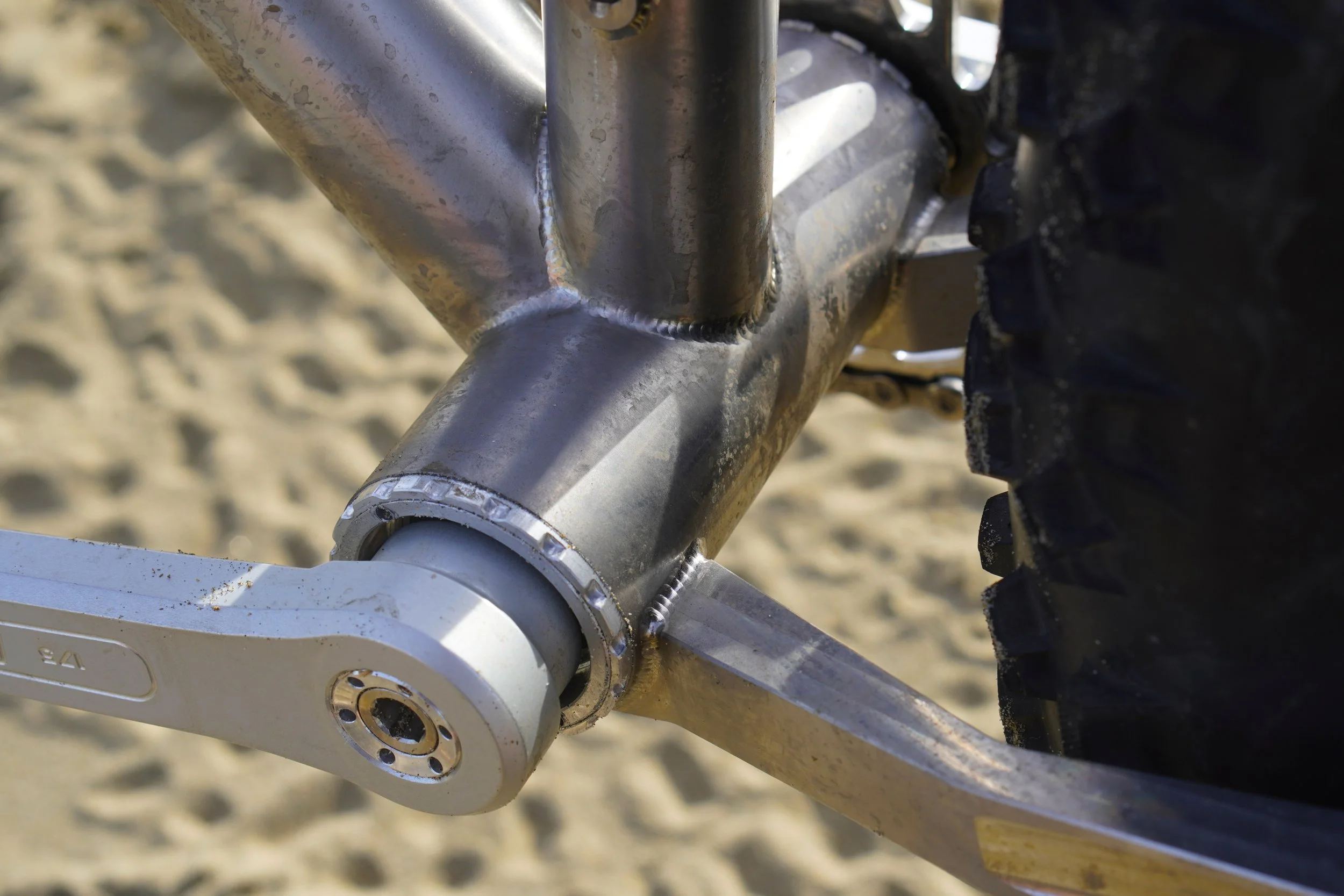
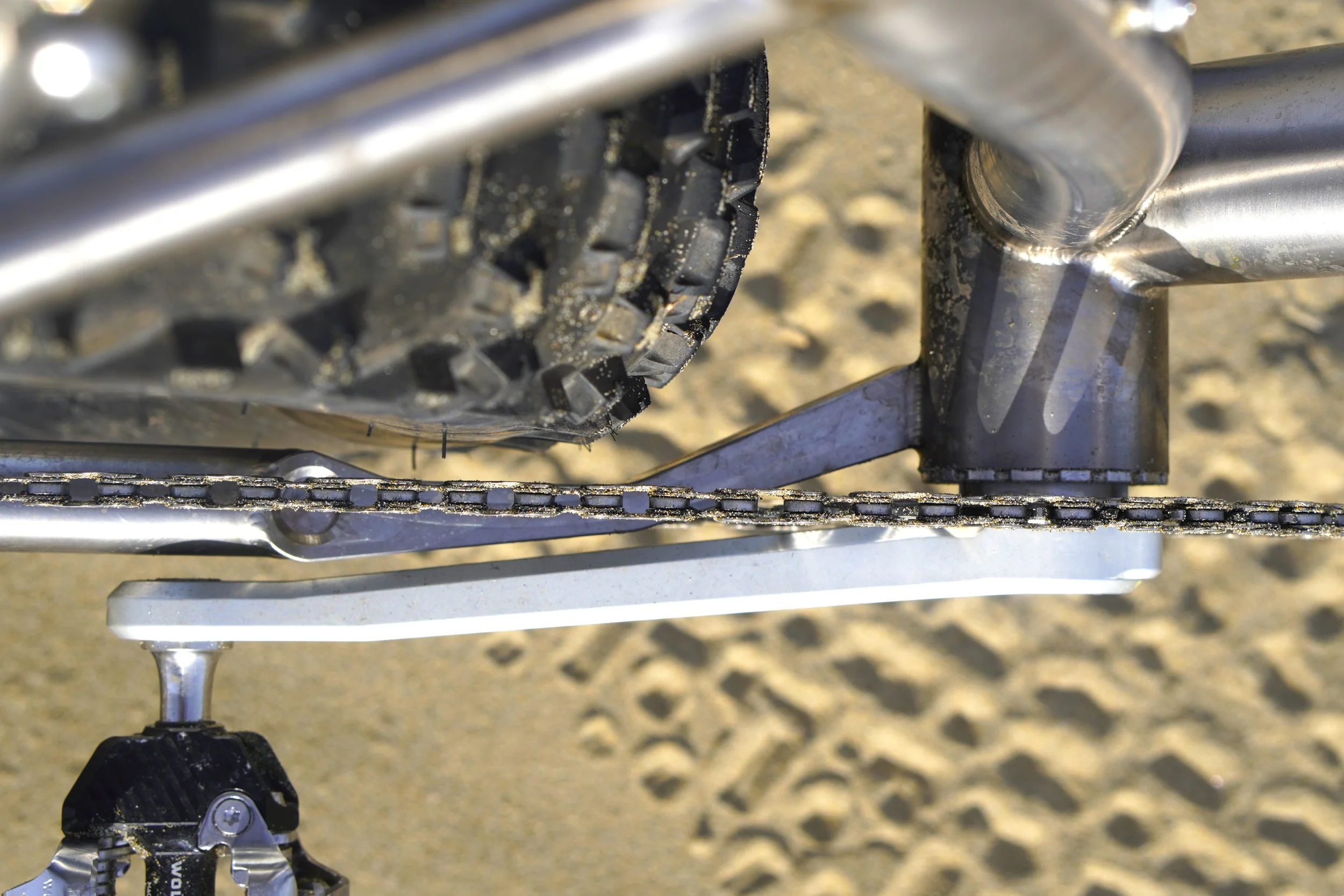
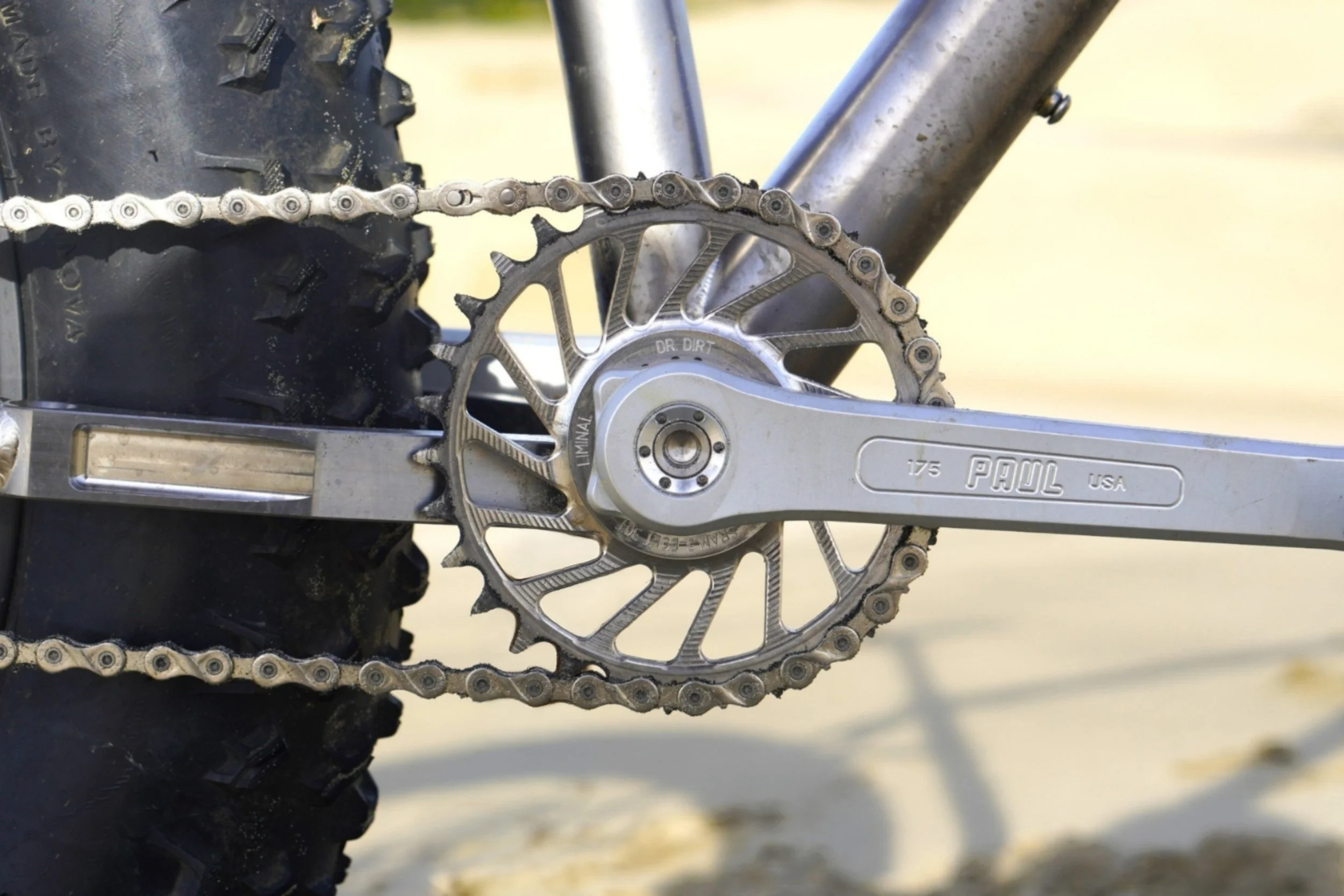
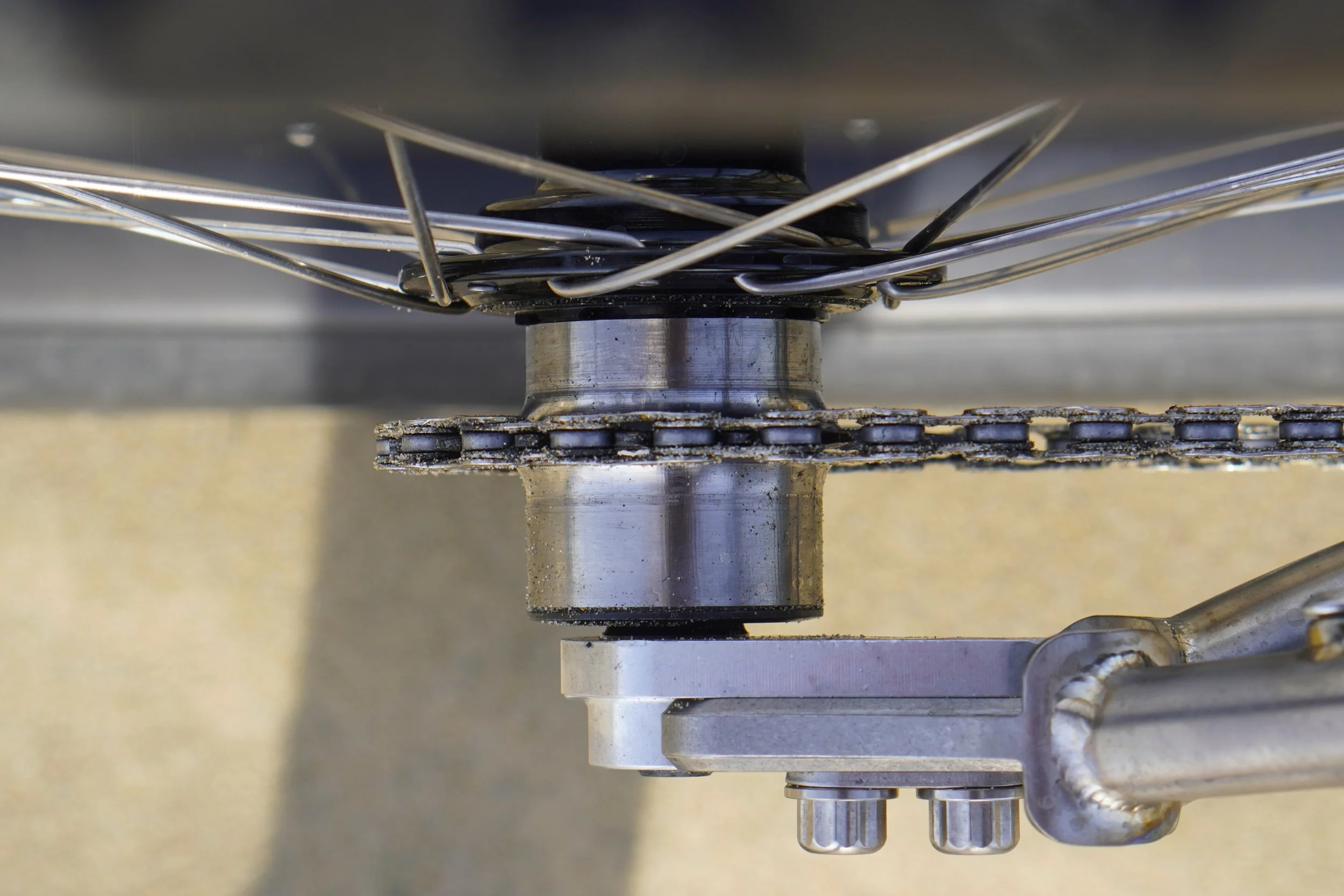
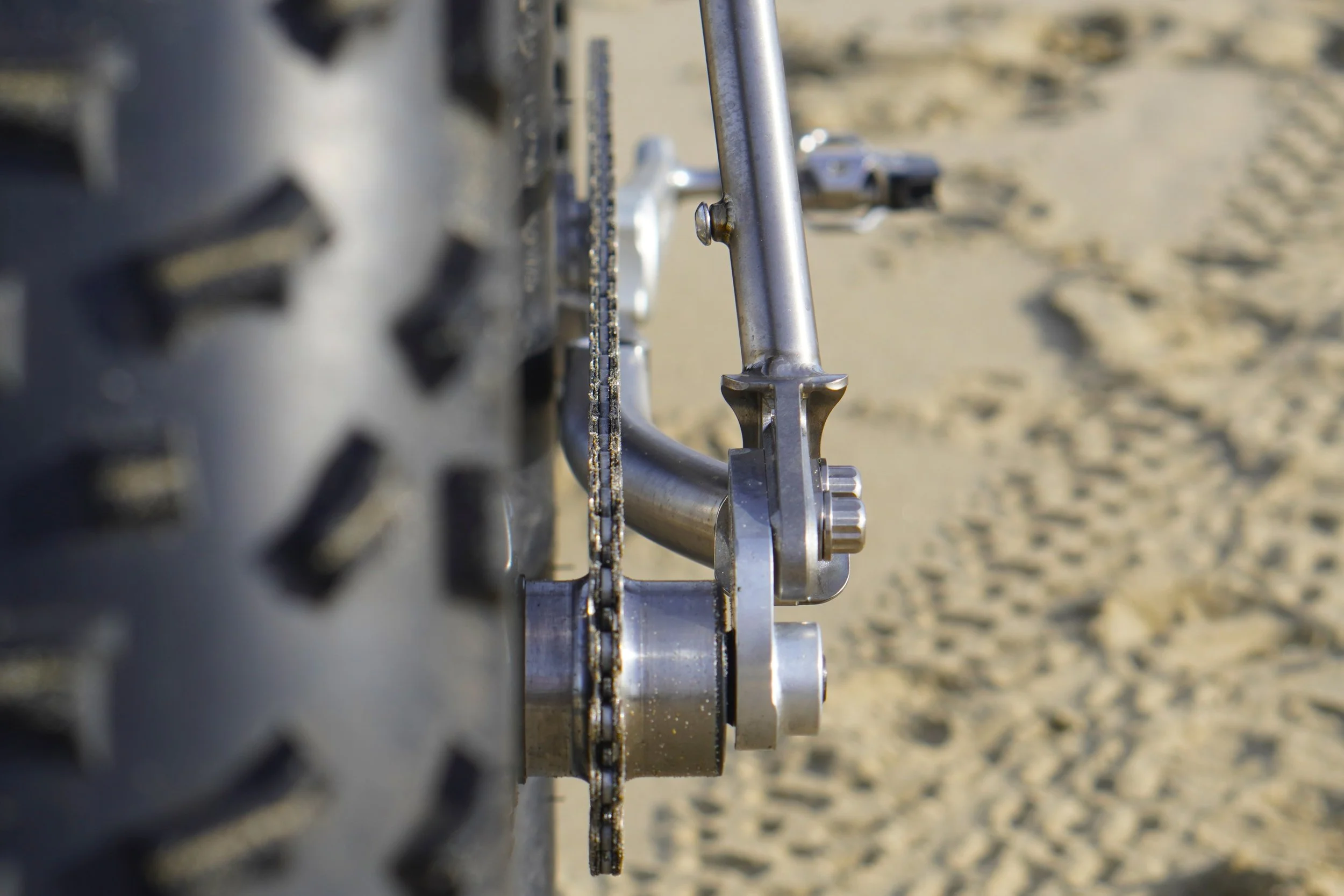
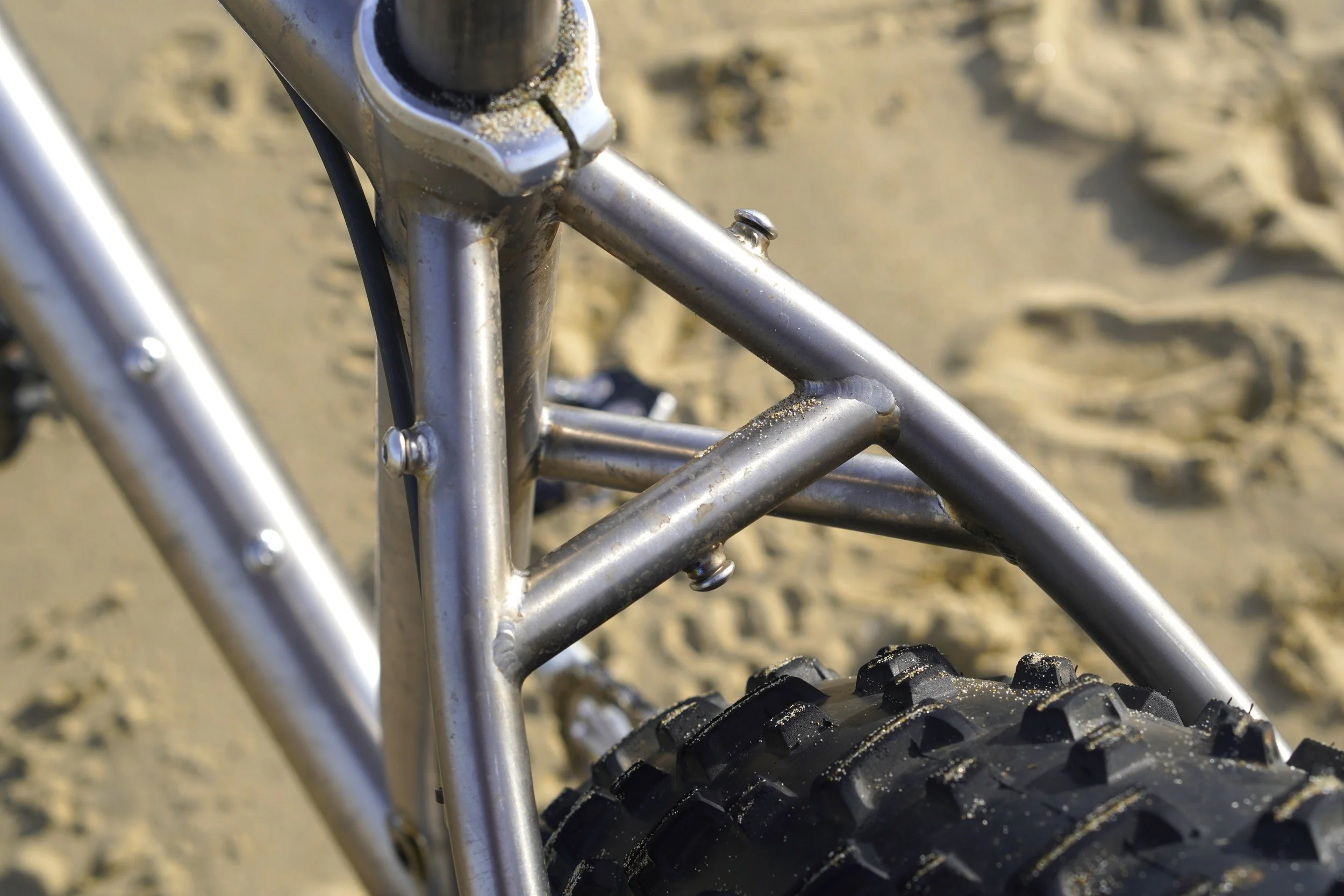
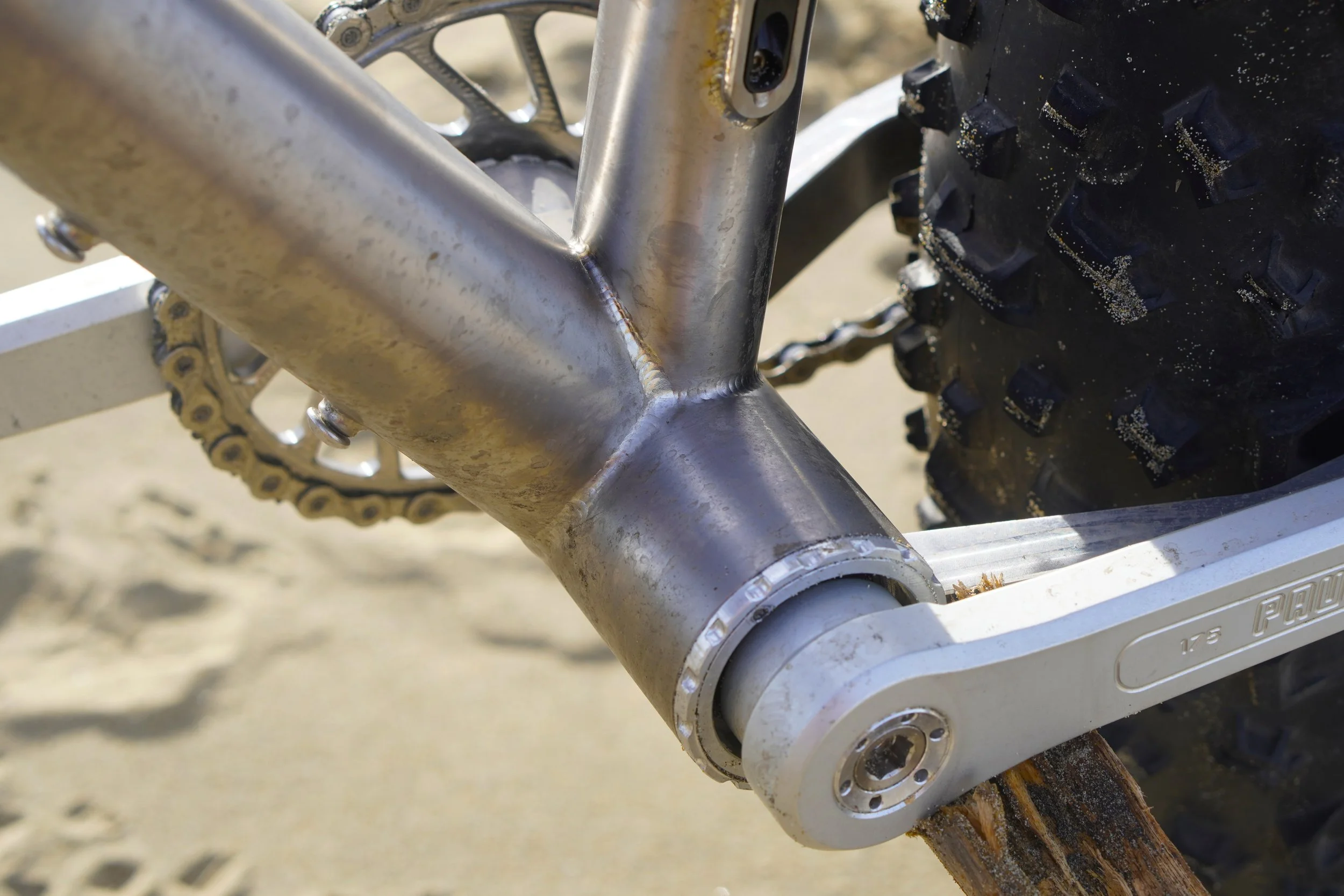
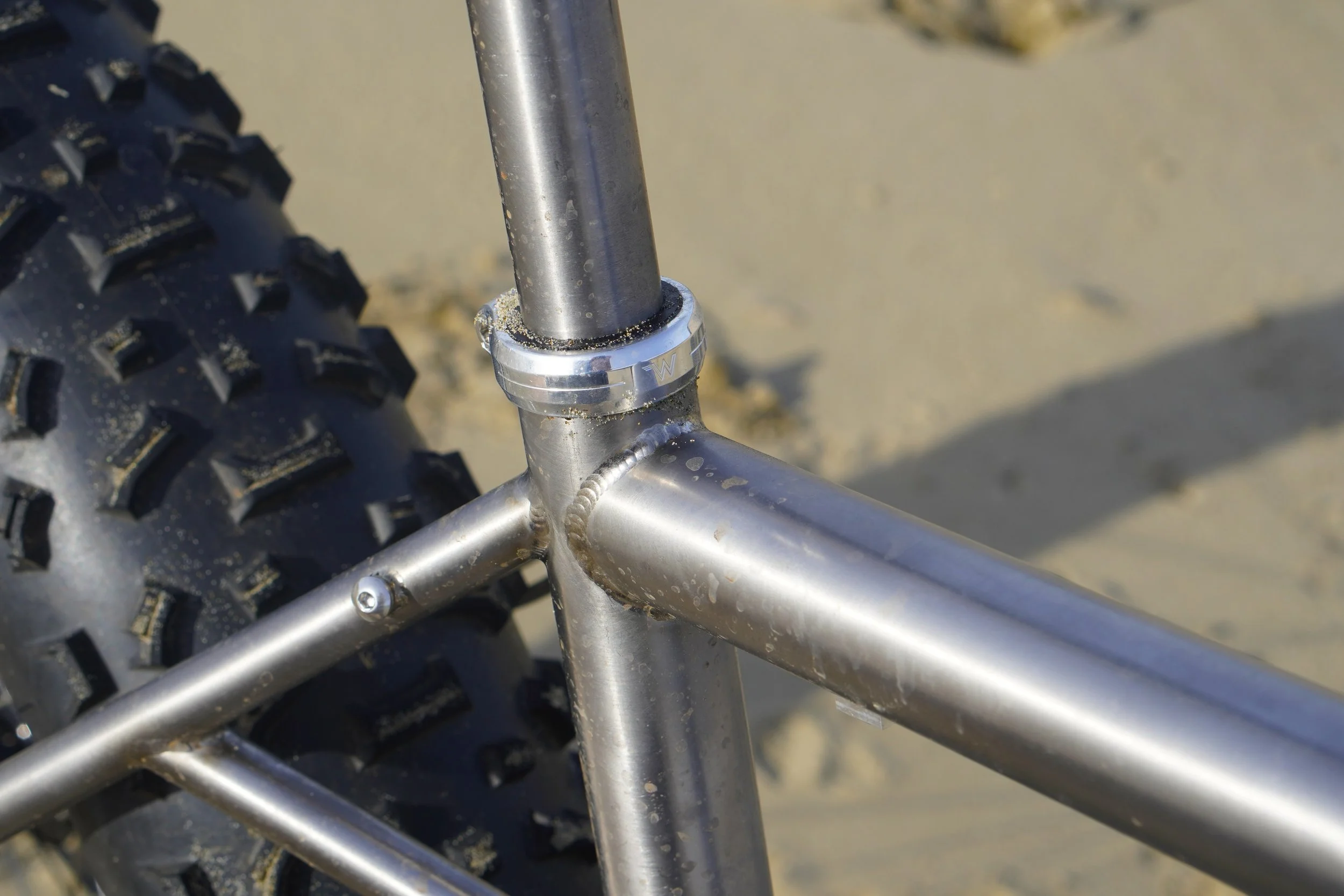
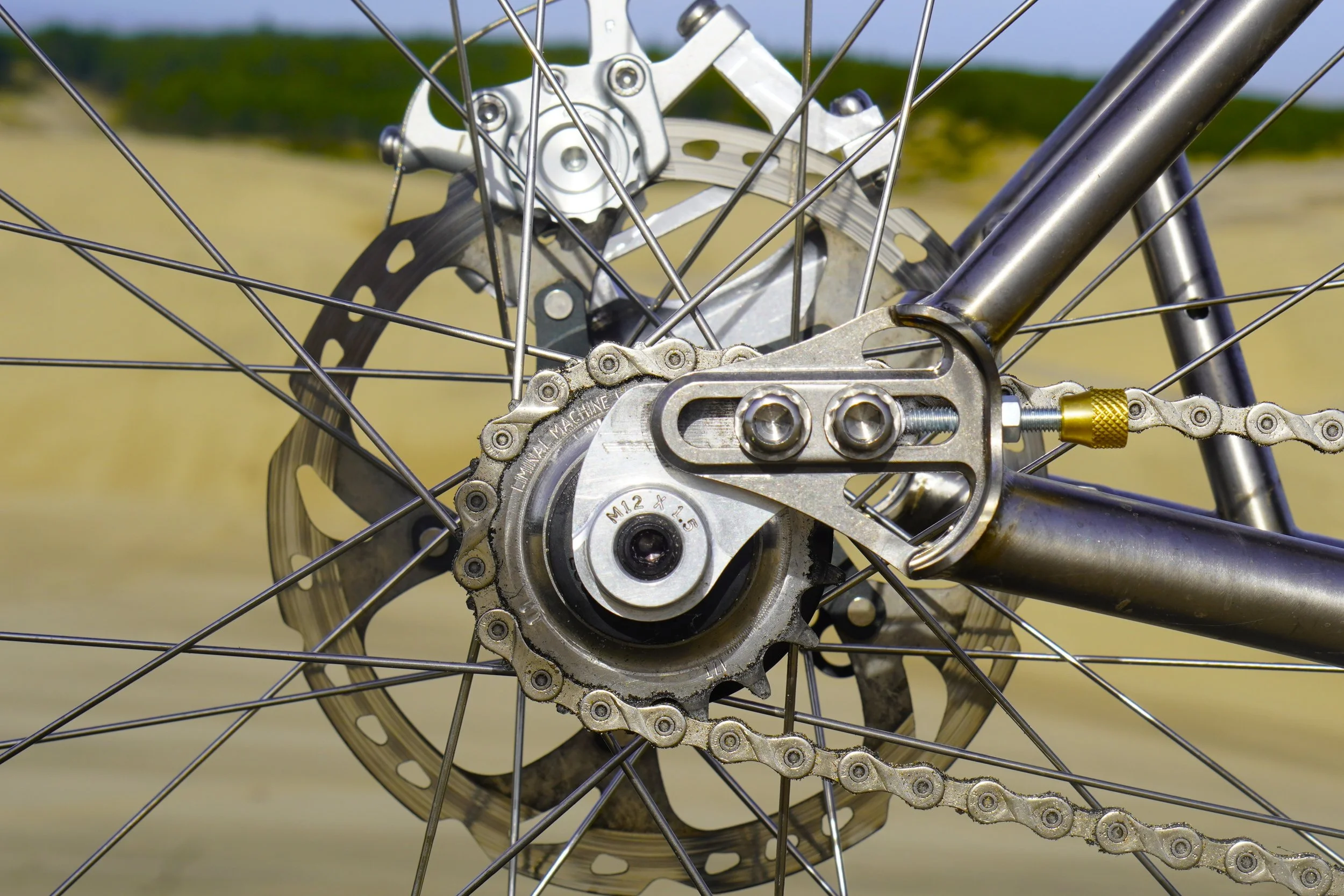
With the cranks and chainring sorted I filled in what little space was left between the tire and the crank with a CNC machined titanium yoke. The yoke pieces match the taper of the Paul arms perfectly and allow ample tire clearance throughout the sliding dropout adjustment range. This was the first time I had to think about clearing the bottom of the casing near the rim as the chainstays are just barely wider than the tire behind the yoke.
Smaller chainrings and cogs wear faster than multi-speed systems where the wear is distributed amongst cogs on a cassette, so we went with a titanium chainring and cog for increased durability. At a marginal weight penalty over aluminum they should last at least three times as long - definitely long enough for the journey ahead and then some. For the ultimate bling I used some off-cut titanium bar stock to machine matching spacers for the cog - waste not, want not.
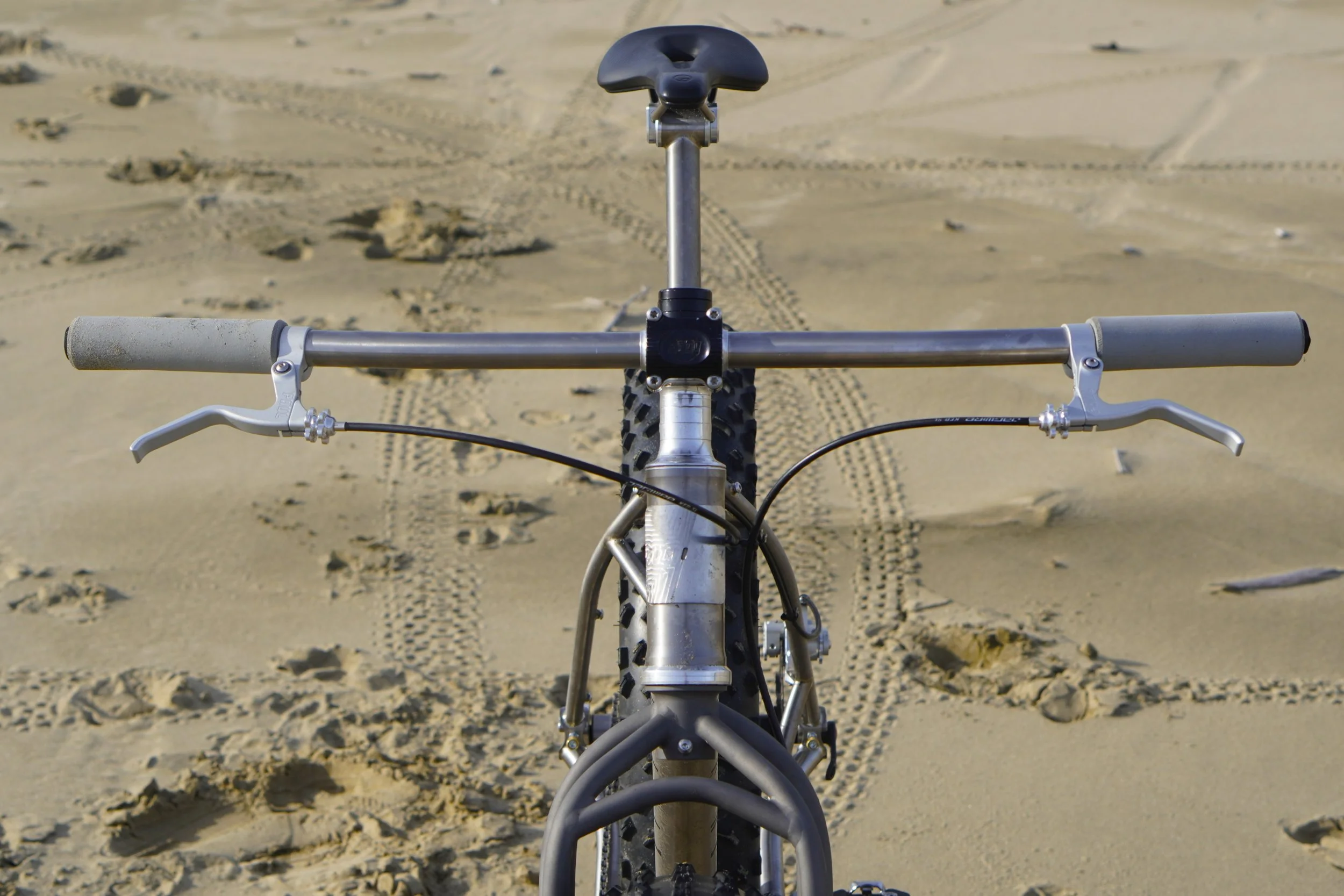
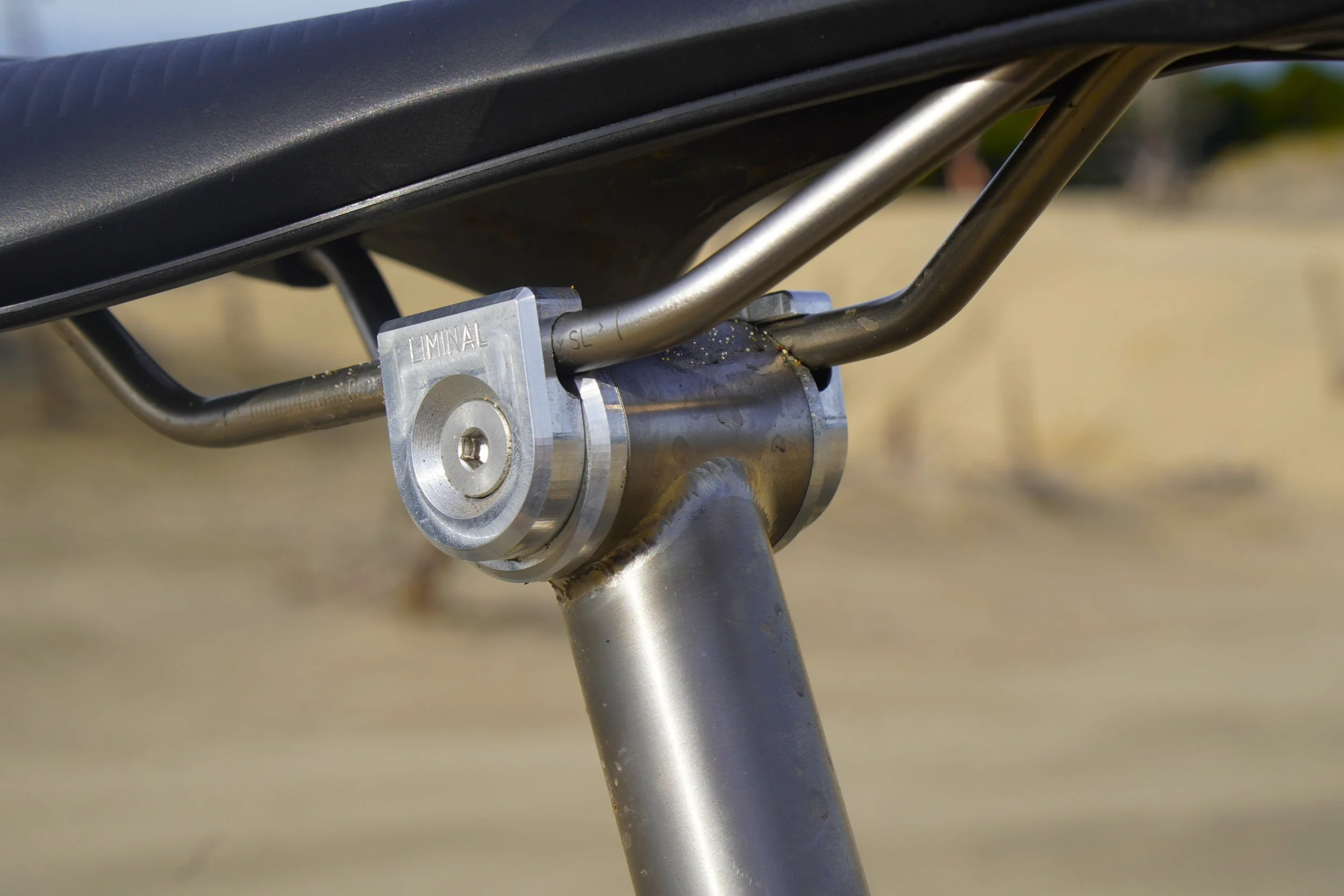
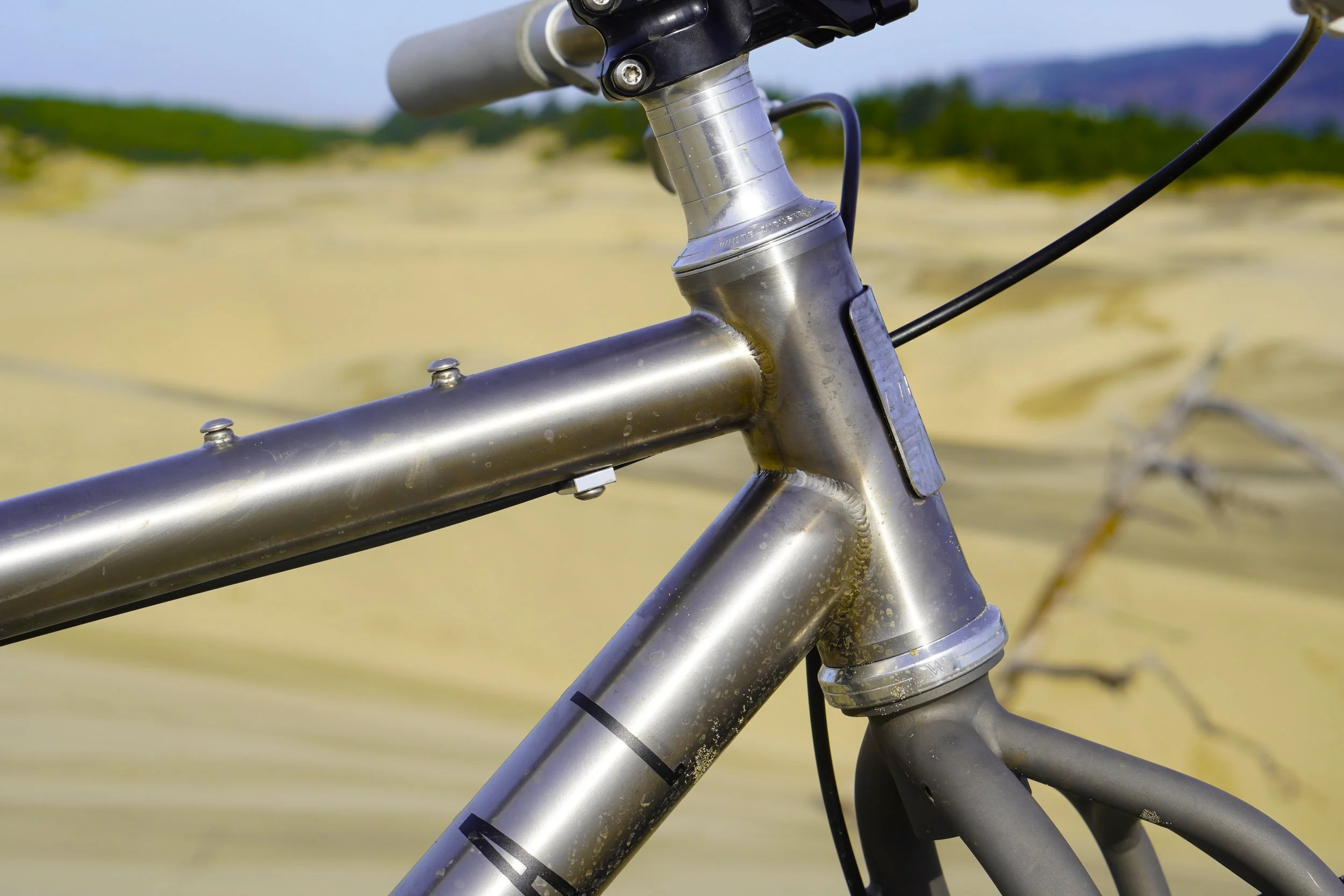
Of course there’s more titanium, I also made front and rear racks, a seatpost, and handlebars. There’s talk of a bar/stem combo and potentially some titanium cranks in the future, time will tell. In the meantime, I’m looking forward to watching Eric’s dot on his adventures and trying not to feel too jealous.